

The Mental Game: Surviving and Positioning in a Bear Market
Bitcoin Roadmap

Your mind doesn’t switch gears as fast as the market does. And that’s where most people get into trouble.
Three Years of Conditioning
For three years, we were in a rising phase of Bitcoin’s 4 year cycle. Everything was about buying dips, adding to positions, staying long, and riding the wave. That kind of conditioning doesn’t just disappear overnight because the chart structure changed.
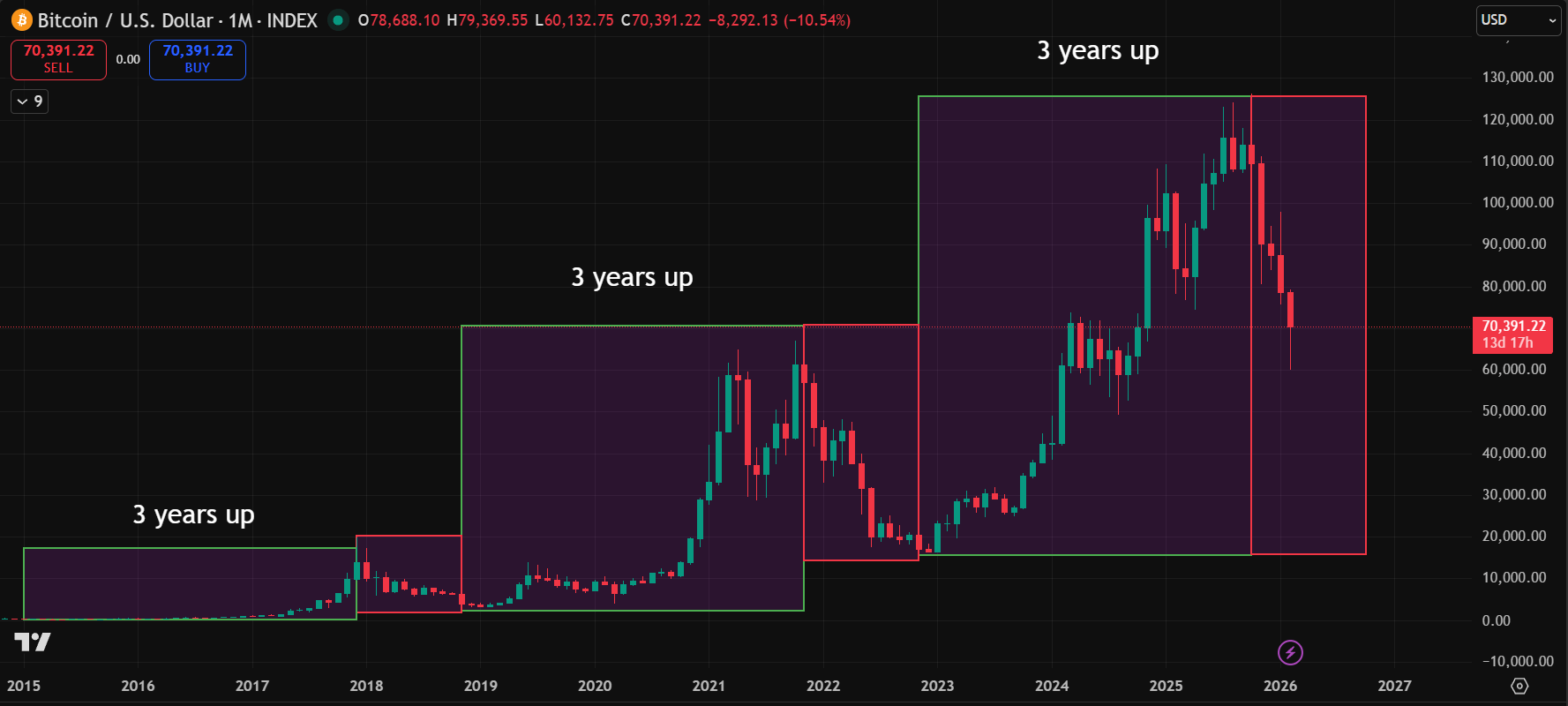
And yet, here we are. The market has shifted. The structure is clearly declining. Lower highs, lower lows, well below the key moving averages. By every measure I follow, this is a bear market. There is no debate about that from a technical standpoint.
But our heads haven’t caught up yet. That’s the real problem.
The Social Media Echo Chamber
You scroll through social media and there’s always someone making the case that the bottom is in. That the next big reversal is coming. That one indicator or another is flashing a signal that means it’s all about to turn around.
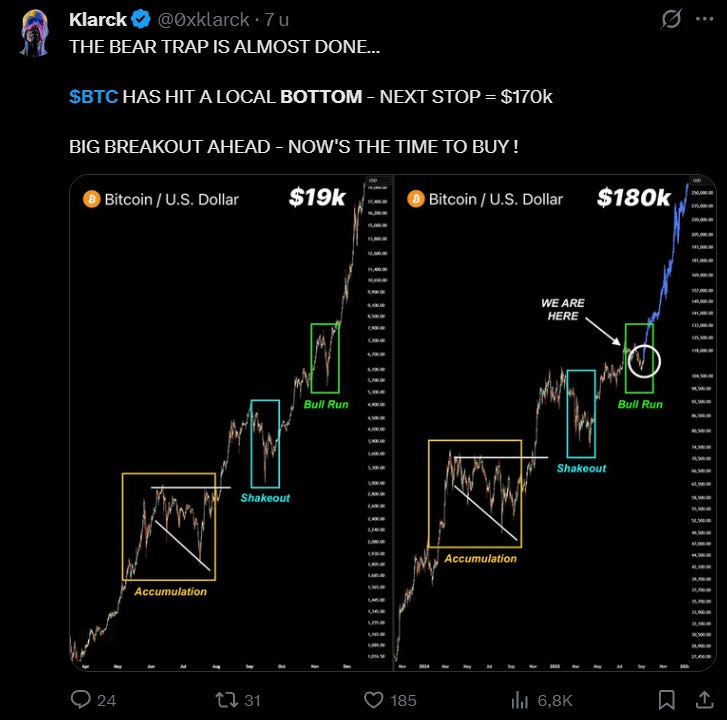
And you want to believe it. Of course you do. We all do. Because the alternative, sitting in cash, watching from the sidelines, being patient, that is boring. It doesn’t feel productive. It doesn’t give you that rush.
So what happens? You play in between. You’re not fully committed to the bear market reality, but you’re also not fully positioned for the bull case either. And you get chopped up. Over and over.
Oversold Doesn’t Mean Over
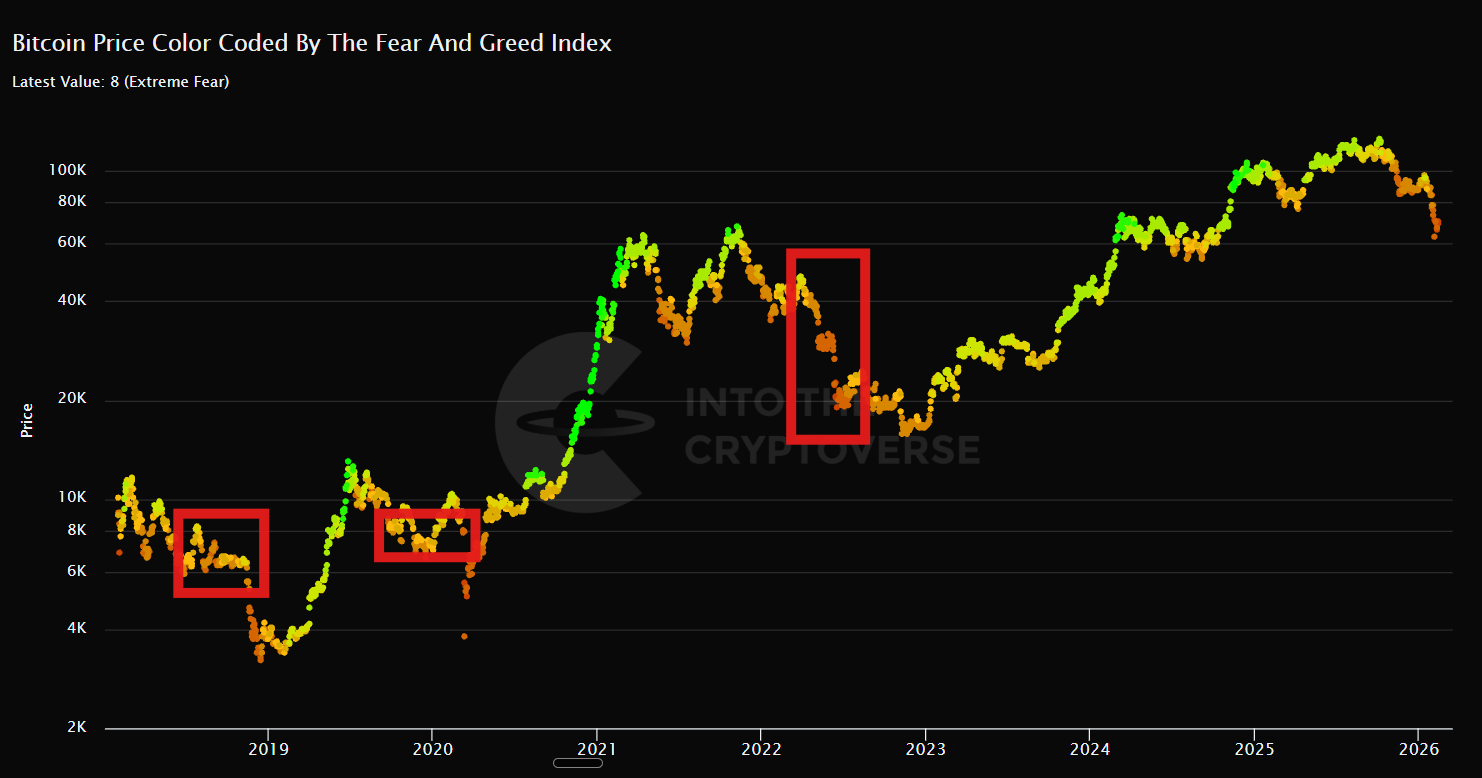
One of the biggest traps I see right now is people pointing at oversold readings on the RSI or extreme levels on the fear index and treating them like guaranteed reversal signals.
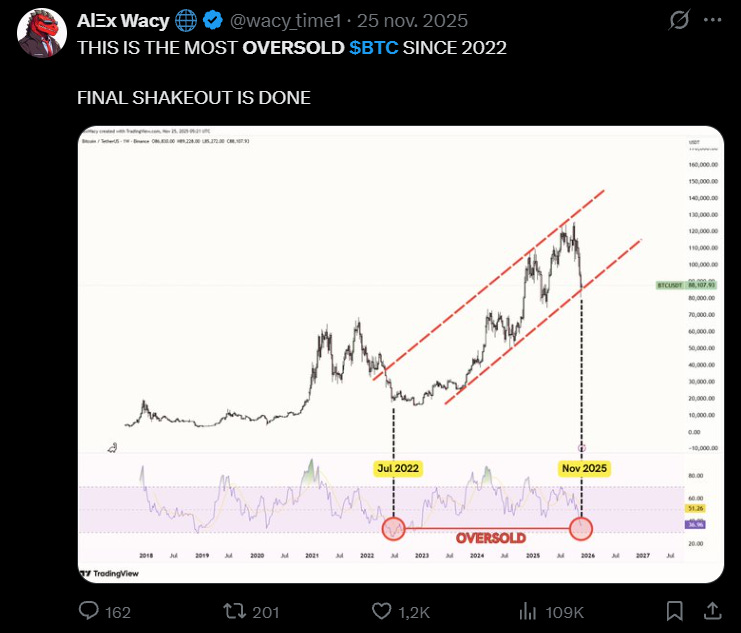
Here is the thing. In a bear market, oversold readings behave very differently than in a bull market. During a strong uptrend, yes, a deeply oversold reading often marks a buy the dip opportunity. That is how bull markets work. The crowd buys the dip, and the trend resumes higher.
But in a bear market? Low RSI levels are mostly a contrarian trap. They pull people in, make them think they’re being smart by buying when everyone else is afraid. And then the market takes another leg down.
The same applies to the fear and greed index. These sentiment tools don’t work well when they’re moving in the direction of the primary trend. In a downtrend, extreme fear can stay extreme for a long time. In an uptrend, extreme greed can persist for months. Cherry picking two or three historical instances where an indicator hit a certain level and then calling a bottom is one of the oldest mistakes in the book.
It’s a Process, Not a Single Event
Bear market lows don’t typically come from one sharp drop. That’s not how this works. What usually happens is the first big leg down shakes people up, and then you get a strong counter trend rally. Everyone gets excited again. The calls for a new bull run get loud. And then the next leg down begins.
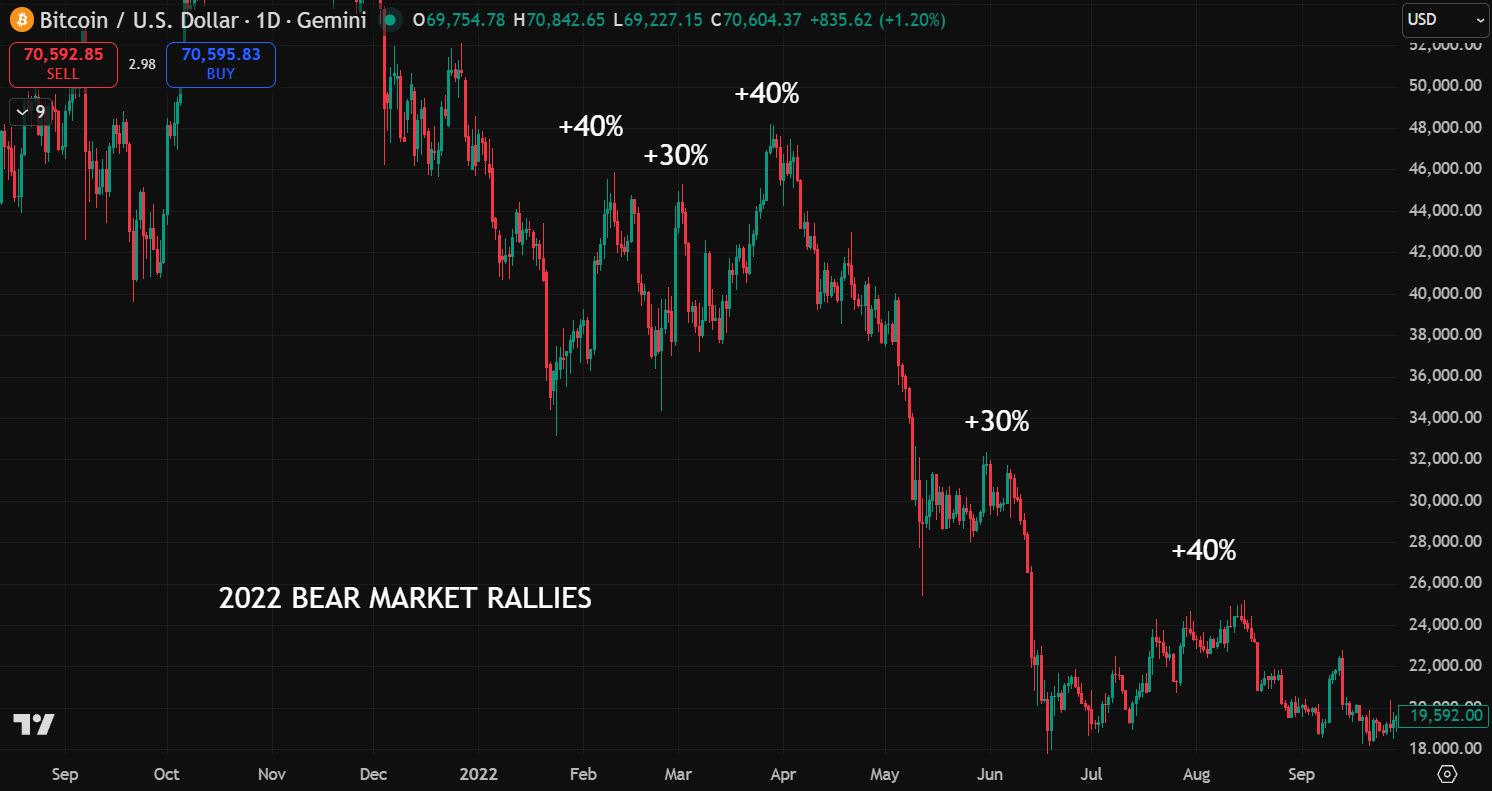
It’s a process that plays out over the full declining phase of the 4 year cycle. Time is a factor. The market needs time to wash out the excess, reset expectations, and truly capitulate.
So when I look at the current setup and I see the possibility of a strong rally developing over the coming weeks, I’m not getting excited about it from a bullish standpoint. I see it for what it most likely is: a counter trend move within a larger declining structure. A move that could feel incredible in the moment but ultimately doesn’t change the bigger picture.
The Psychology of Getting Left Behind
Let’s say we are now in that strong counter trend rally. Bitcoin pushes back toward key moving averages, maybe prints somewhere in the high 80s or even the low 90s. What happens to your psychology at that point if you don’t have any exposure?
You start seeing it everywhere online. “Bull market is back.” “I told you so.” “This is the bottom.” And you don’t have a position. The pressure builds. The fear of missing out grows. And there’s a very real chance you end up buying right near the top of that counter trend move, just when the bear market is about to resume its decline.
This is why I think it’s worth having some measured exposure during these rallies. Not because I think the bear market is over. But because having a small position keeps your emotions in check. It keeps you from making impulsive decisions driven by FOMO at the worst possible time.
The Real Opportunity Is Ahead
The best thing we can do right now is protect capital and be mentally ready for what comes next. That’s the number one priority.
The biggest gains in any cycle don’t come from perfectly timing the top or catching every swing. They come from getting positioned early in the next rising phase at low prices. A low average entry is the single best cushion against all the mistakes we inevitably make during a bull run. And we all make them.
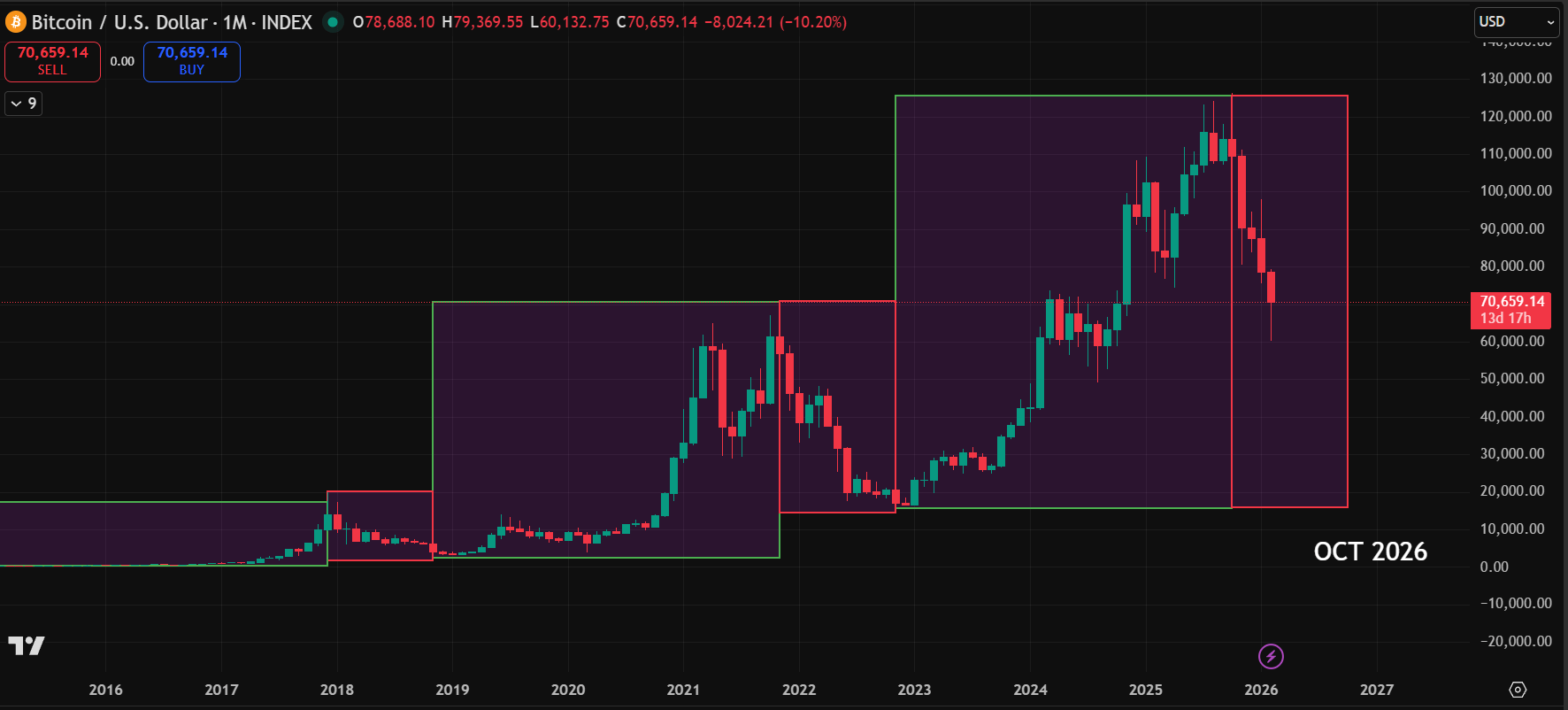
The people who perform best over multiple cycles aren’t the ones with the flashiest trades. They’re the ones who were buying aggressively during peak fear, during the final capitulation, when everyone else had finally given up.
Being Conditioned for Opportunity
Most of the bulls who are still out there clinging to hope right now will eventually get crushed by reality. That always happens. The hope gets destroyed slowly, and by the time they finally accept what the market is telling them, they’re selling at the worst possible time. That’s how bear markets wash people out.
But if you’ve already accepted the current environment for what it is, you’re in a completely different position. You’re not in denial. You’re not clinging to outdated expectations. You’re conditioned for the eventual opportunity.
When those bear market lows finally arrive, and they will, most people will be demoralized and making emotional decisions to sell. That’s exactly when we want to be buyers.
Strategy Over Ego
I could be wrong about all of this. Of course I could. There are specific levels that would make me reconsider the entire outlook, and I’m watching those closely.
But here is what I know. I have a strategy. That strategy is following the signals it’s designed to follow. And abandoning it now because social media is loud or because one indicator is flashing oversold would be reckless.
When you have a framework, you follow the framework. You don’t toss it aside the moment it becomes uncomfortable. You trust the process, manage your risk, and stay disciplined.
Because ultimately, we all see the same charts. We all see the same patterns. The difference between good outcomes and bad ones isn’t about who draws the best lines on a chart. It’s about execution. It’s about making the right decisions when the market is testing your resolve. And right now, that resolve is being tested hard.
Stay patient. Stay protected. The real opportunities are still ahead.
Thanks for reading.
PS… Want the complete shortcut to trading altcoins with precision (without wasting months on trial-and-error)?
Click here to grab the Altcoin Profit Toolkit — 8 structured modules + 3 indicators including the Smart Exit Decoder that shows overbought conditions on multiple timeframes, helping you scan, enter, and exit trades like a pro trader.
Written by Timothy Assi, an Elite Popular Investor on eToro.
Not investment advice. eToro is a multi-asset investment platform. Your capital is at risk. For information and educational purposes only.
Copy Trading does not amount to investment advice. The value of your investments may go up or down. Your capital is at risk.
Connect with me on:
🟦 Linkedin: Timothy Assi
🟪 Instagram: @panic_drop
⬛ X: @timoassi
📧 timothy@panicdrop.com
🟩 Panic Drop Podcast : on your favorite streaming app