


Before we start, something special.
I’m running the AI Edge Sale for the next few days.
This article is about where I think the next phase of AI investing is going, and I want more of you inside Panic Drop for what comes next.
Until August 23, you can get 30% off your first year as a paid subscriber.
You’ll get my full portfolio, buy levels, trades and every update I make along the way.
Get 30% off Panic Drop for one year
The chip index is up about 51% and the AI hardware trade is still going hard.
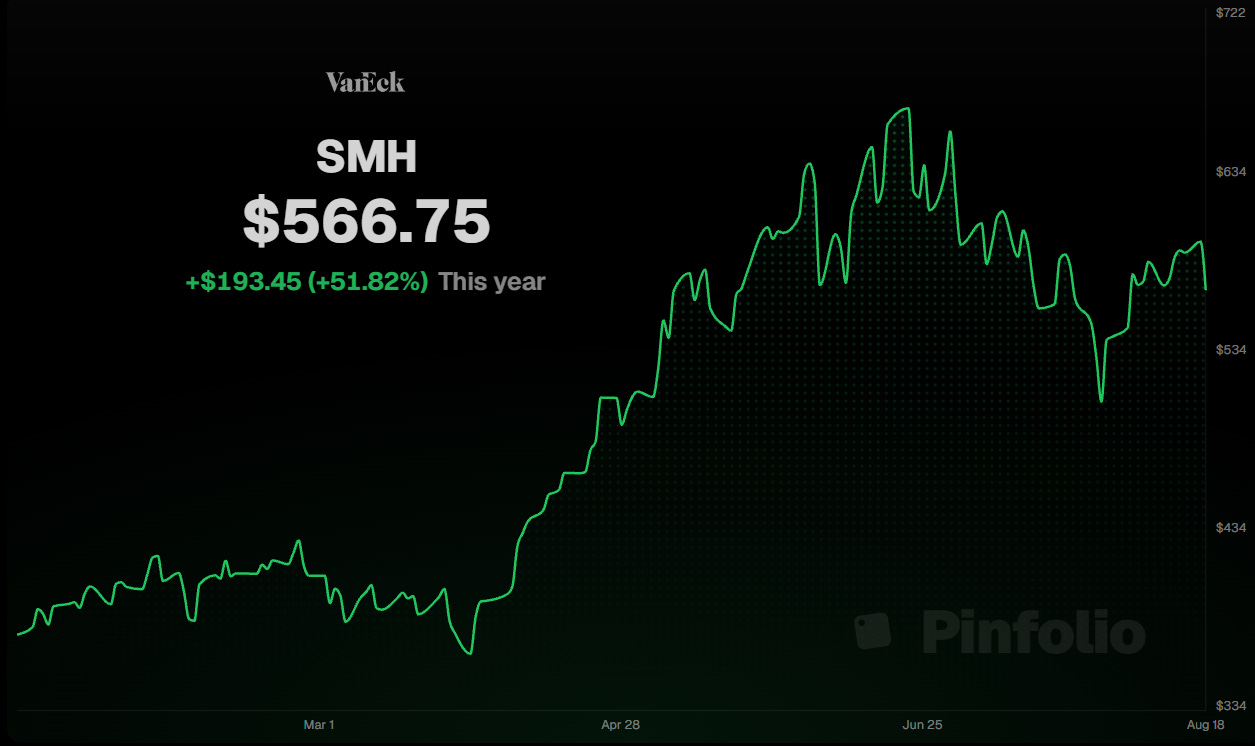
Now look at software. Salesforce is down about 30% this year. ServiceNow down about 27%. Oracle down about 33%. HubSpot down about 41%. The big software ETF is flat while the S&P 500 is up.
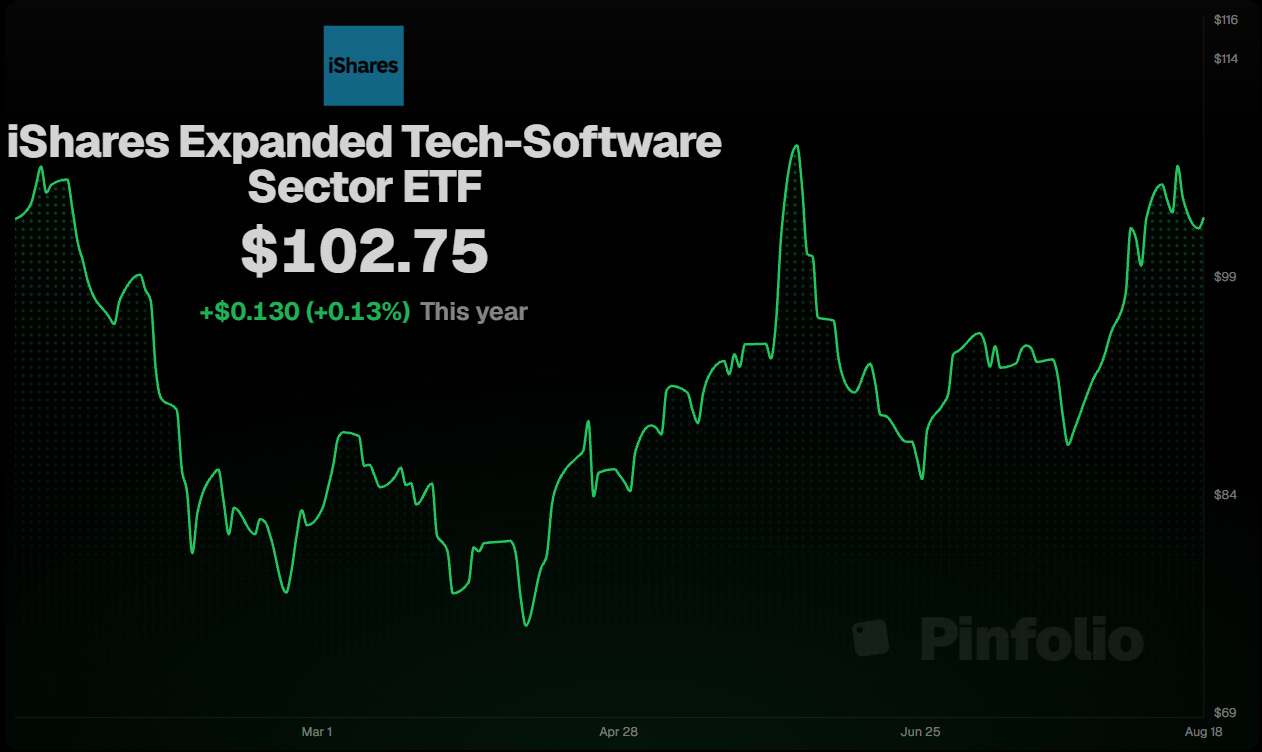
So chips won again and software lost.
But in those same months, cybersecurity went crazy. Palo Alto Networks is up about 109% this year.
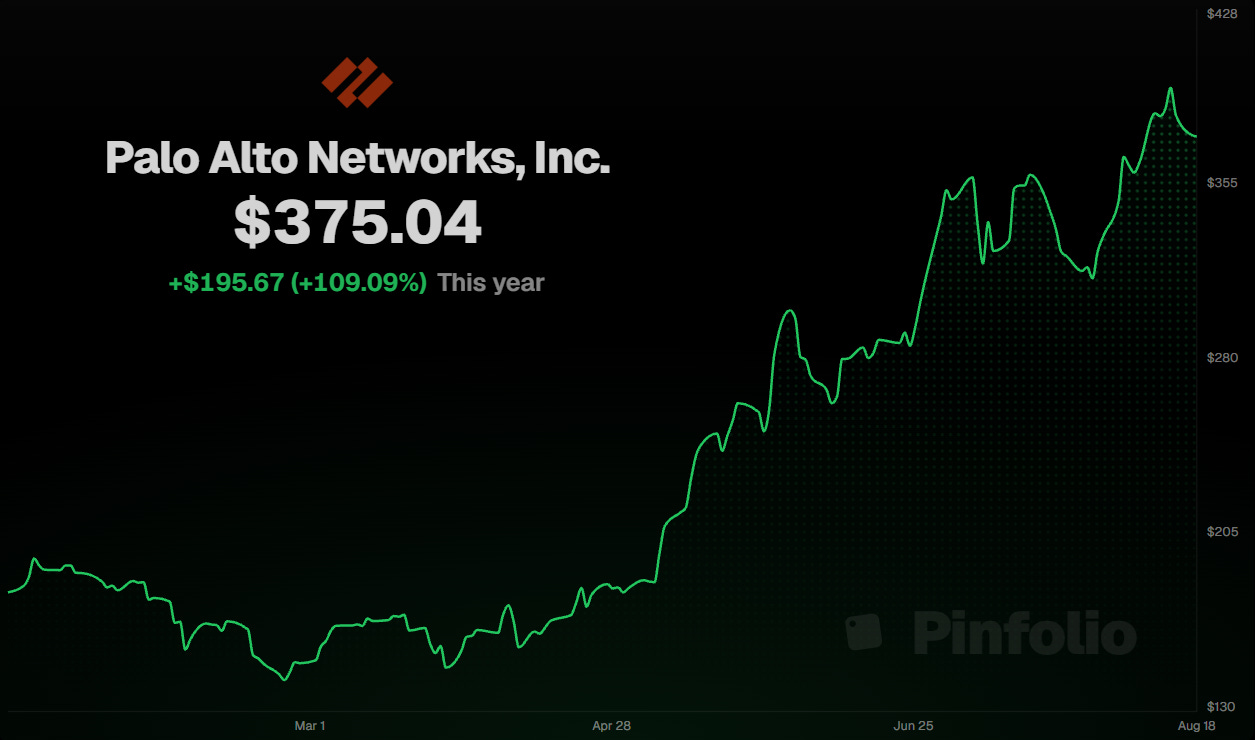
CrowdStrike about 84%. Fortinet about 104%. Palo Alto and CrowdStrike both had their best quarter ever between April and June. They went up 113% and 95% in three months.


Just so you know, you can check out my portfolio live on eToro, and I’ve covered PANW for months in the Top Stocks Vault series.
And these are software companies. They do not build AI. They use it.
So think about this. Two groups of software companies. Same market. Same AI wave. One group up 100%. The other underperforming the S&P500.
The big question we should ask is:
Does AI let this company charge more, or does it force them to charge less?
Security lets them charge more. Every AI agent your company turns on is a new door for hackers. A new identity to protect. A new thing that can be tricked. So more AI means more security spending. Simple.
The analysts at BTIG came back from the Black Hat hacking conference this month and said the same thing over and over: AI agents have completely changed the threat picture, and things are getting worse. UBS thinks the cybersecurity market grows 13% this year to about $240 billion.
Now the other group. Software.
The problem is not software itself. It is software that AI makes less valuable.
If you charge per employee and AI lets your customer operate with fewer people, fewer people can mean fewer seats and less revenue. That is the risk the market sees in companies like Salesforce.
But look at ServiceNow. Its AI products already crossed $1 billion in annual contract value. AI is not just replacing seats there. ServiceNow is selling the automation itself.
That is the software I want to own.
Companies with strong moats, critical workflows, proprietary data and high switching costs that can use AI to become more valuable and charge more. Because some software will absolutely get disrupted by AI. But the winners could capture part of the productivity gains themselves.
So I am not bearish on software. I am bullish on the software companies that can monetize AI.
The question is simple: does AI make this company more valuable to its customers, or less?
Same technology. Opposite result.
That is the sorting machine. And it runs through all six waves below.
Why I Think In Waves, Not In Stocks
Most people build a portfolio like a playlist. They add whatever sounds good that week. Then they wonder why the whole thing feels random.
I want something else. I want every stock I own to sit inside a trend where demand keeps growing whether the economy cooperates or not.
There are two kinds of trends. Cyclical and secular.
Cyclical trends go up and down with the economy. Shipping rates. Car sales. Steel. Ad budgets. You can trade them, but you have to get the timing right again and again. That is very hard.
Secular trends come from structural change. Demographics. Physics. Rules. Behaviour that does not go backwards. The spending keeps growing through recessions, elections, and whatever the president posts at seven in the morning.
Want to know where I’m actually putting my money?
The framework is only half the story. Paid members get the stocks I own, the ETFs I’m using, the trades I’m making and how I’m positioning for these six waves.
The AI Edge Sale is live until August 23.
In a cyclical trend, a 30% drop might mean you were wrong.
In a secular trend, a 30% drop is usually a discount. Because demand did not change. Revenue is still growing. Cash flow is still growing. The only thing that changed is what other people will pay you today.
That is how you buy fear instead of running from it. Not bravery. Structure.
But 2026 taught me something else, and this is the hard part.
A secular trend protects the industry. It does not protect the company.
Keep that in mind for every wave below.
Wave One: AI And Robotics
The driver has not changed. AI is going into manufacturing, healthcare, finance, logistics, energy and defence. And once a company puts it in, they do not take it out.

What changed this year is the size. JPMorgan now thinks the chip industry does about $1.68 trillion in sales this year and about $2.25 trillion next year. The big cloud companies have committed around $750 billion in spending for 2026.
The numbers underneath are real. Nvidia’s last quarter was $81.6 billion, up 85% from a year ago. Data centre alone was $75.2 billion, up 92%. They guided to about $91 billion for this quarter. Broadcom’s AI chip business grew 143% and they say it grows more than 200% next quarter.
Now here is the detail almost nobody noticed. And it is the best lesson of the year.
Nvidia is up about 17% this year. The chip index is up about 54%.
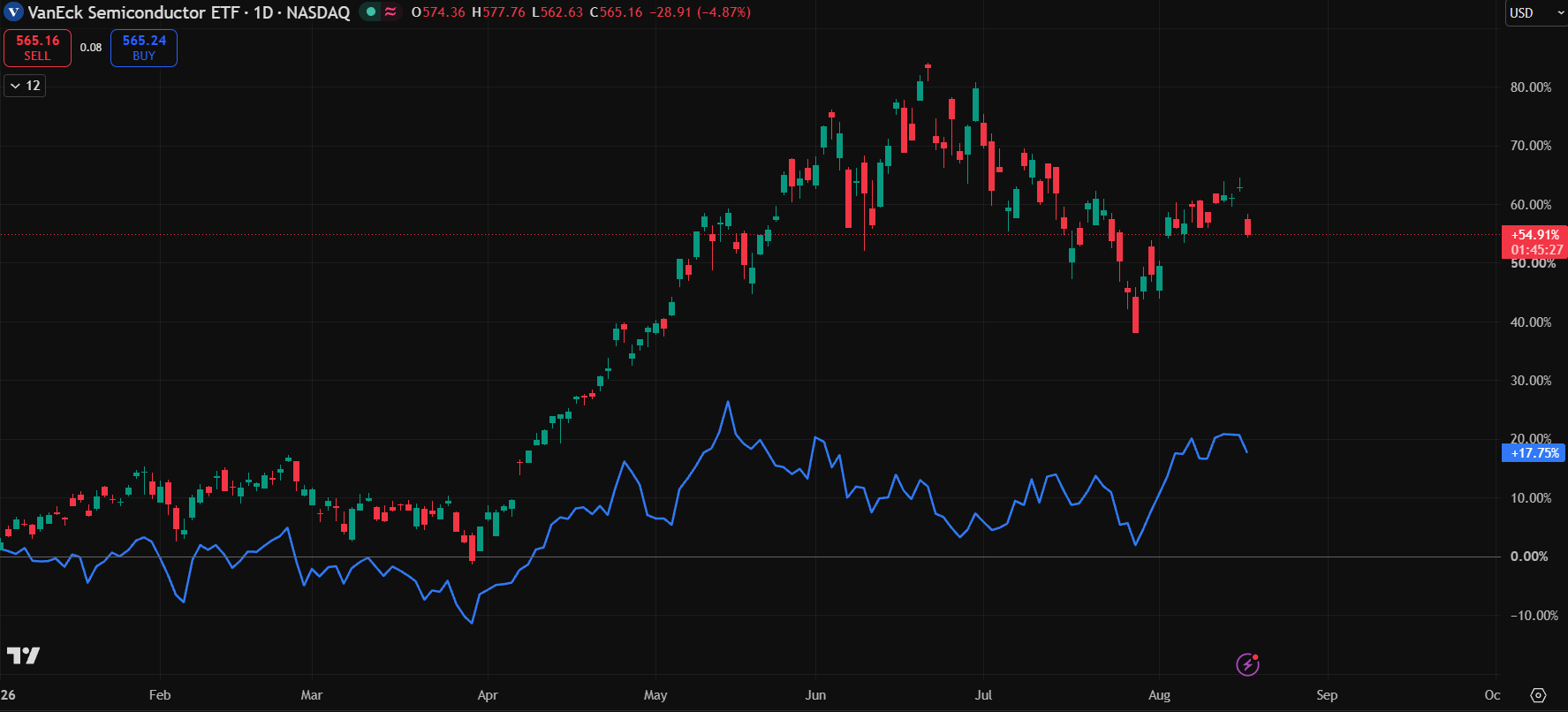
Read that again. The most dominant company, in the most dominant trend, growing revenue 85%, and it lost to its own industry by more than 60 points.
So where did the money go? Memory. Custom chips. Networking. Fibre optics. AMD is up somewhere 113%. Marvell about 150%. Corning, a glass company from 1851, is up about 120% because data centres need its fibre optic cable.
So the lesson is this. When money spreads out, it does not always leave the sector. Sometimes it just moves inside the sector, away from the crowded name and toward whatever is still hard to get.
If you owned this theme through the obvious name, you got a small piece of what the theme actually paid.
Now the robotics part. The story is intact. Amazon is putting robots across its whole network. Robotaxis are driving around today. Nvidia is even hiring people to design data centres in space. So this is getting serious.
But I still will not buy a company that makes humanoid robots. Let me explain why:
Airlines became common in the 1920s. The market has grown almost every year since. It is worth over a trillion dollars today.
At the peak there were about 2,000 airline companies.
About 90% of them went bust or got bought. Of the ones still alive, only about half make money in any given year. And when they do make money, the profit margin is around 3%. Even the best airlines in the world make about 8%.
Add up every profit and every loss in the history of the airline business and the total is negative.
So the market grew huge and the companies collectively lost money. Why? Too many of them selling the same thing.
Now, who made money on airlines? Boeing and Airbus. The guys who sold them the planes.
Humanoid robots are heading the same way. Too many makers. Same specs. Price war. Thin margins.
So I would rather own whoever sells them the parts and the software that every robot maker has to buy, no matter who wins.
The exception is specialised robots where it is genuinely hard to compete. Surgical robots are the clearest example. That is a business I want.
Wave Two: AI Energy And Infrastructure

The enery demand story got stronger this year. Not weaker.
Data centres use about 6% of American electricity today. BloombergNEF thinks it goes to about a fifth by 2035. The EIA expects record power use in 2026 and 2027.
Constellation grew first quarter revenue 64%. They guide to more than 20% earnings growth every year through 2029. They have over 10 gigawatts of data centre power deals in the pipeline.
Vistra bought Cogentrix and its ten gas plants for $4.7 billion. They signed a twenty year deal with Meta.
And both stocks fell about 32% from their highs.
Why?
Because a shortage only makes you money if you are allowed to charge for the shortage.
Look at what happened. Getting new power plants connected to the grid in PJM is slow. Electricity bills went up for normal families, so it became a political issue. One big utility CEO said flat out that he is not interested in data centres because they only push up the price of energy for everyone else.
Then in January, politicians proposed something called a Reliability Backstop Auction. It would make big data centre operators pay for new power plants through fifteen year contracts at a fixed price. They want it running by September.
Think about what a fixed price contract does. It takes the value of the shortage away from the power company and hands it to the customer.
So here is the lesson. Being the bottleneck only pays if you are allowed to charge for being the bottleneck.
These companies need enormous amounts of money to build things. They do not have a strong moat. And politicians can change their prices.
The tailwind is real. The pricing power is not safe. That is exactly what my filter is built to catch, and it is why I hold this wave differently from the others.
Wave Three: Healthcare And Longevity
This is the most reliable driver of all six waves. Because it is already locked in.

By 2050 the number of people aged 65 and over doubles to 1.6 billion. And when people get older, they use more healthcare. Simple.
Add chronic disease. Add everybody getting more health conscious. Add AI speeding up drug discovery.
There is no version of the future where this reverses. Nobody is getting younger.
And unlike everything else on this list, healthcare is recession proof. In the worst year of the worst recession, you still go to the hospital and you still fill your prescription.
But this wave gave us the clearest warning of the year about buying cheap stocks.
Eli Lilly and Novo Nordisk are the two giants in obesity. The market hit $66 billion in 2025.
Lilly is up about 13% this year and 58% over twelve months. It passed a trillion dollars in market value. It guided revenue to $80 to $83 billion. Second quarter revenue grew 48% to almost $23 billion. It holds about 60% of the obesity market.
Novo is udown 12% this year. Down more than 69% from its 2024 high. It guided sales to somewhere between flat and down 6%. It cut about 9,000 jobs. It took about $8 billion in one off charges. And its new drug CagriSema lost a head to head trial against Lilly’s drug.
Now here is the important part.
Novo has looked cheap for two years. Forward P/E around 11 to 13. Lilly was at 26 to 31. The sector average is about 17.
So every single quarter, Novo looked like better value on the screen. And every single quarter, it lost more market share.
Cheap is not a reason to buy. Cheap is just a description.
A low P/E on a company losing market share in a two horse race is not a margin of safety. It is a countdown.
What made Lilly worth three times the multiple? Better drugs and bigger factories. And both of those show up in market share long before they show up in the valuation.
The rest of this wave is where I think the durable businesses are. Medical devices and diagnostics. Healthcare software. Hospitals and managed care. Precision surgery.
Biotech I mostly stay away from as a long term hold. Not because the upside is not there. It is. But the outcome is binary. A biotech either becomes huge or it dies. That is a trade with a stop loss, not a marriage.
Wave Four: Digital Payments
Want to know where I’m actually putting my money?
The framework is only half the story. Paid members get the stocks I own, the ETFs I’m using, the trades I’m making and how I’m positioning for these six waves.
The AI Edge Sale is live until August 23.
This wave has the best business structure on the whole list. And this year it got tested.

The drivers are easy. Ask yourself when you last paid cash. Now ask when a shop last refused your cash. It is happening more and more.
Cashless is spreading. Every app has payments built in now. Everybody expects money to move instantly.
And here is the beautiful part. Payment volume grows with nominal GDP. So inflation actually helps them, because their fee is a percentage of a number that keeps getting bigger.
Now, most people get one thing wrong here, so let me be clear.
Visa and Mastercard are not credit card companies. They are payment technology companies.


The bank gives you the card. The bank charges you interest. The bank takes the risk if you do not pay. Visa and Mastercard just make sure the transaction goes through safely, billions of times a day. They are the toll road.
In January the administration called for a 10% cap on credit card interest. And the market sold everything with the word card in it. Visa and Mastercard dropped along with the banks.
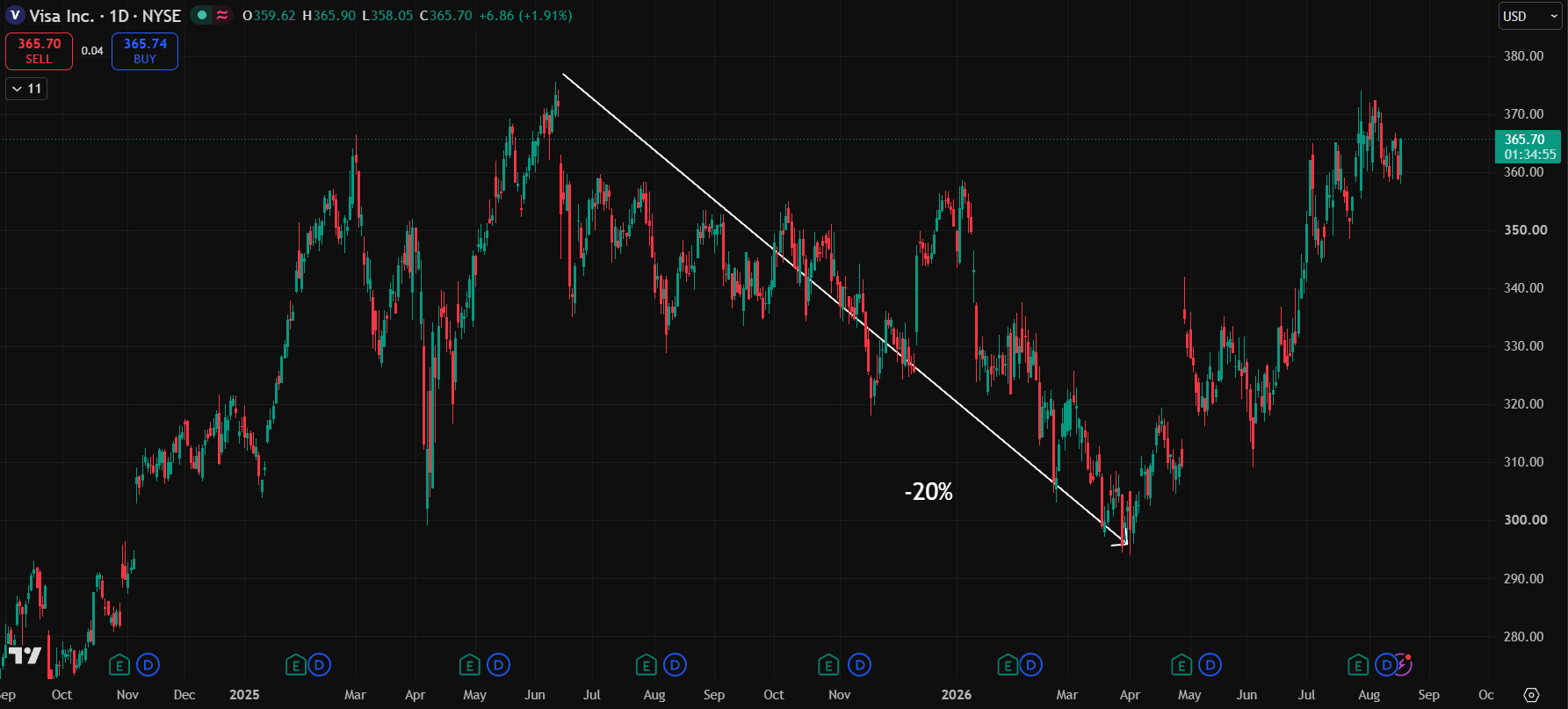
That was a mistake. And you could have worked it out in five minutes by asking one question: who actually collects the interest?
Within weeks the two networks recovered. And the cap? It never happened. The bills are still stuck in committee. Average credit card rates are still above 20%. Seven months later it is still just a headline.
Then both companies reported record quarters. Mastercard revenue up 18% with a 56% operating margin. Visa revenue up 15% with a 62% operating margin. Return on invested capital above 50%. Return on equity in the triple digits.
That is exactly the profile I want in a big position.
Wave Five: Cybersecurity
This is the wave that got it right this year.

For most companies, security spending grows faster than the overall tech budget. Because if you get hacked, you can lose the whole company, and the board knows it. When budgets get tight, security is the last thing you cut. Gartner has company security budgets at about $215 billion this year.
What changed is that AI turned out to help these companies instead of hurting them.
At the start of the year, these stocks got dumped with all the other software, because people thought AI would kill software pricing. Palo Alto traded down to about $143 in February.
Then the market figured it out. Every AI agent a company turns on is a new door for attackers. So these stocks exploded.
Palo Alto grew revenue 31% last quarter. CrowdStrike grew 26% and crossed $5 billion in recurring revenue. Palo Alto also bought CyberArk for $25 billion in February to own the identity piece.
Result: Palo Alto up about 109%, CrowdStrike about 84%, Fortinet about 104%. All near record highs in August.
Now the discipline part. Because this is where people get hurt in a group that already ran.
CrowdStrike trades around 90 times forward earnings. Palo Alto around 50.
These stocks were expensive in January. They crashed. And now they are more expensive than before the crash.
So I hold this wave. I am not adding here.
Wave Six: The Space Economy
Most exciting wave. Most dangerous wave.

The change here is real. Launch cost fell about 90%. It used to cost around $18,000 to put one kilogram into orbit. Now it is closer to $1,000. And it keeps falling.
When getting somewhere becomes ten times cheaper, things that were impossible become normal. That is the story of every frontier in history.
So what does that unlock?
Data centres in space. Sounds crazy, but think about the problem on the ground. You need land. You need power we do not have. And the heat is hard to get rid of. In space you have unlimited sun and the vacuum handles the cooling. Nvidia is hiring for this right now.
Missile defence. Golden Dome is funded and handing out contracts.
Satellite connection straight to your normal phone. I still think this is the most underrated thing on this whole list.
Earth imaging, where the money has moved to the AI reading the pictures.
The American space budget for 2027 alone is $59.7 billion, paying for 31 launches.
And then SpaceX actually listed.
What I said back then was simple: great companies often fall 50% from their IPO price before they go anywhere. So when it lists, watch. Do not buy.
Want to know where I’m actually putting my money?
The framework is only half the story. Paid members get the stocks I own, the ETFs I’m using, the trades I’m making and how I’m positioning for these six waves.
The AI Edge Sale is live until August 23.
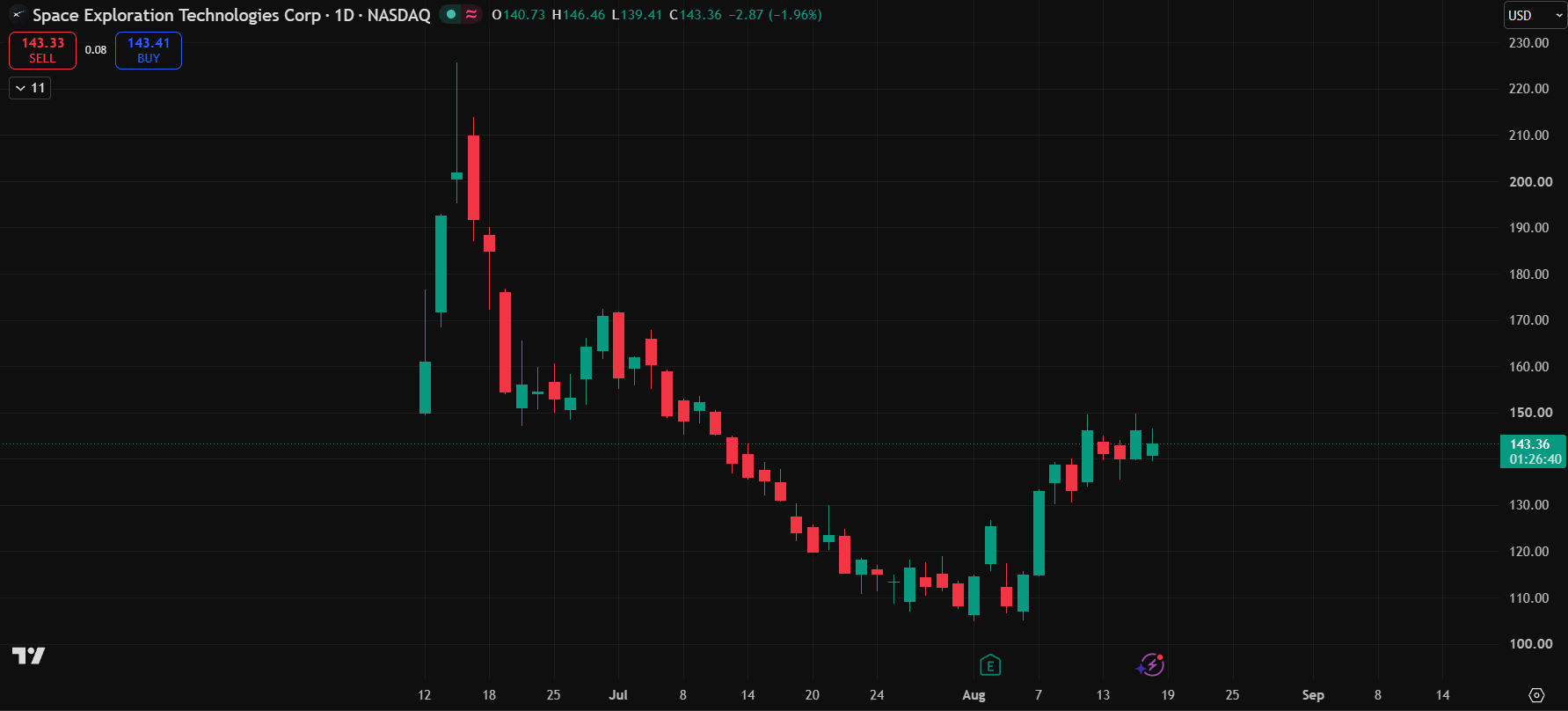
It priced at $135 on June 12 and raised about $75 billion. Biggest IPO ever. It opened at $150 and closed the first day at $161. Within days it touched $225.64, worth about $2.1 trillion.
Then it fell. By late July it was under $110. That is more than 30% below the IPO price and more than 50% off that high. Six members of Congress bought it and were underwater in eight trading days.
The business itself is fine, by the way. Second quarter revenue was $7.81 billion and beat estimates by almost 15%. Starlink doubled to 12 million subscribers. The AI segment grew 247%. But they also lost about $1.9 billion in the quarter, and lost more than $4.9 billion in 2025 on $18.7 billion of revenue.
So what is the lesson? Not that I am smart.
The lesson is that an IPO price is the seller’s price. Set by people who know more than you, on the day they most want to sell.
Waiting cost you nothing. Buying the hype at $200 cost you 45%.
The rest of the sector behaved exactly like the speculative group it is. In July, Rocket Lab, AST SpaceMobile, Intuitive Machines, Planet Labs and SpaceX all fell roughly 25% to 33% in one month. Together. On no company news at all.
Now let me show you the valuation problem, because this one is worth sitting with.
You cannot use discounted cash flow here. There is no cash flow. You cannot use discounted earnings. There are no earnings.
So you are left with price to sales, or price to sales growth, or a rule of 40 adjustment. And these methods disagree violently.
I have run names in this sector where one method says $64, another says $7, a conservative blend says $13, and a bull case built on the company’s own 2030 target says over $100.
Same company. Same day. Fifteen times difference depending on which method you pick.
That is not analysis. That is an opinion with decimals on it.
So this is a trade. Not a marriage.
The Filter: What Earns A Position
By now you can see the point. Being in the right wave is necessary. It is nowhere near enough.
So before anything gets into my portfolio, it has to pass five tests.
One. Predictability. Do revenue, profit and cash flow keep growing through a trade war, a pandemic, a recession and a rate shock? I am not looking for one good year. I want the line going up no matter the weather.
Two. Profitability. Return on equity above 12% to 15% as a floor. Return on invested capital above 12% to 15% too. ROIC matters most to me. It tells you what the company earns on every euro it puts back to work. High ROIC companies grow by reinvesting. Low ROIC companies grow by asking you for more money.
Three. Growth. I do not need explosive growth. Steady and reliable beats spectacular and jumpy, because I can hold steady and reliable through a crash without panicking.
Four. Moat, and what AI does to it. This is the test that 2026 forced me to sharpen. It is not enough to ask if a company has high switching costs. You have to ask what happens to their pricing when customers turn on AI agents everywhere. If customers need the product more, the moat is getting wider. If they need fewer seats of it, no amount of good product saves you. Salesforce has a huge moat and still lost a third of its value, because the market decided AI shrinks what that moat can charge.
Five. Financial strength. The balance sheet has to survive two bad years without raising money. Being forced to sell shares at the bottom is how you take a permanent loss.
Now this is the most useful sentence I can give you:
If the company passes the filter, buy the company. If the trend is real but no company in it passes the filter, buy the sector through an ETF.
That one rule solves most portfolio problems.
Look at wave two again. The power shortage is undeniable. But the companies fixing it need huge amounts of capital, have narrow moats, and can have their prices set by politicians. Individually, they fail my filter.
So do I skip a wave that takes data centres to a fifth of American electricity? Of course not. I own the sector through an ETF. I get the trend and I accept average quality spread out, instead of mediocre quality concentrated.
And it works the other way too. In payments I found businesses with 50% plus ROIC in a two company market. I do not want an ETF there. An ETF would water down the two best businesses in the wave with dozens of worse ones.
When you can own the monopoly directly, own the monopoly directly.
So the ETF is not the beginner option. It is the right tool when the trend is stronger than the companies inside it.
When To Buy: Nothing Goes Up In A Straight Line
You can pick the right wave and the right company and still lose money for two years. Because you paid the wrong price.
My rule is simple. I buy on the wave down. Never on the wave up.
So for every name I do two things.
First, I work out what I think it is worth. My own number.
Second, I mark at least four support levels below that number.
Why four? Because you cannot predict where a fall stops. Palo Alto went from about $143 in February to about $400 in August. If you only marked one level, you either missed the whole thing, or you spent everything at the first stop and had nothing left for the good prices.
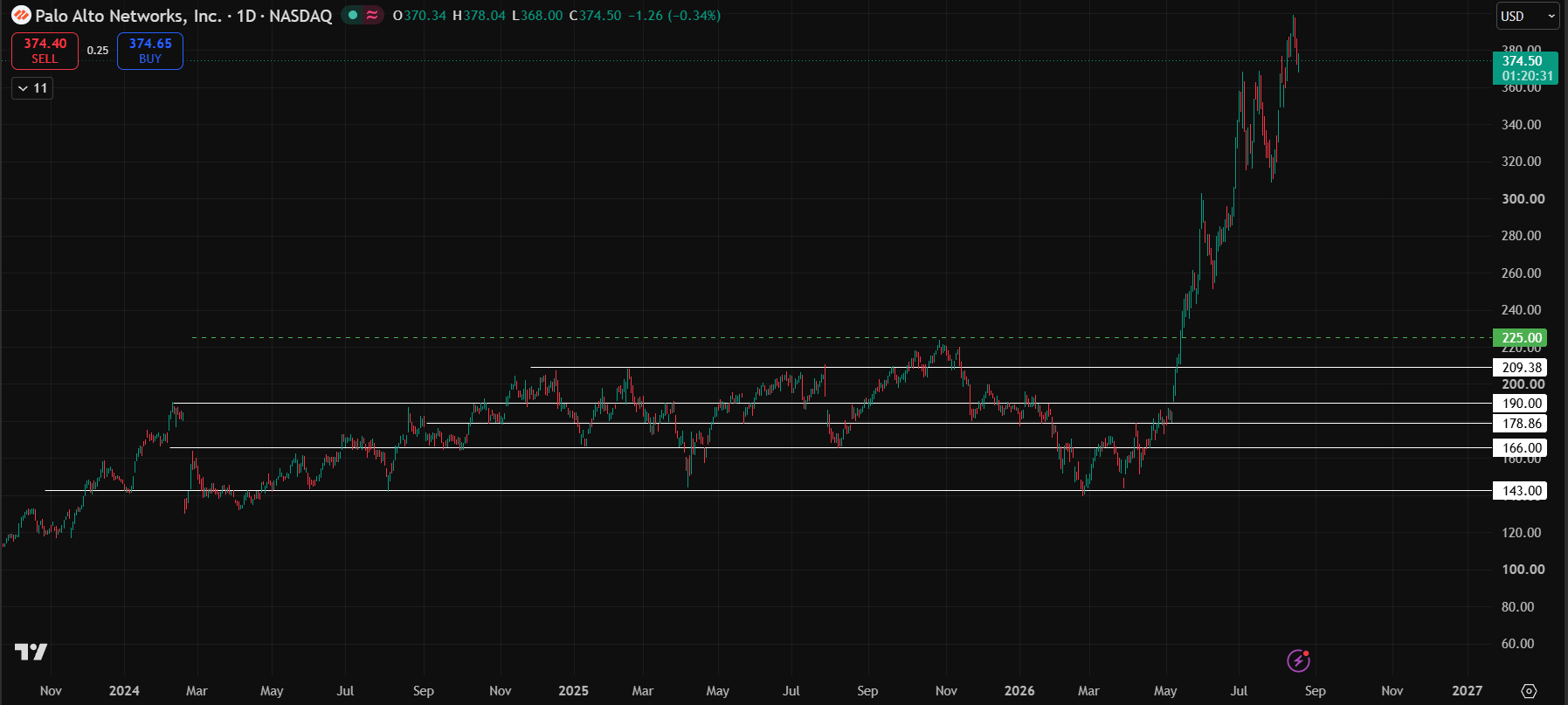
So I buy in quarters. A quarter of my intended position at each level.
If it only reaches the first level, fine. I own a quarter position in a company I like. That is a perfectly good outcome.
If panic takes it all the way to the fourth, then I am fully loaded at prices nobody wanted to touch.
Only do this with companies that pass the filter. This is where people blow themselves up. A great company that falls 40% comes back, because the cash flow keeps growing underneath the price. A weak company that falls 40% can just keep falling forever.
Know if you are investing or trading. And never let one turn into the other by accident.
An investment is a marriage. Proven business, real cash flow, passed the filter. I can close my eyes and hold it through a bear market with no stop loss, because time is on my side.
A trade is a one night stand. Speculative, no profits yet, maybe wonderful, maybe a disaster. So you use protection. Stop loss set before you enter. Small size. Take profits on the way up.
And the killer mistake? Starting a trade, then calling it an investment after it goes against you. That is not conviction. That is an ignored stop loss wearing a costume.
Where I Actually Sit
So that is it. One buying rule: ask whether AI lets a company charge more or forces it to charge less. That one question separated the winners from the losers in every single sector above.
The framework is worth more than the names. If you understood the three ideas in this piece, you can build this portfolio without me.
But you probably want to know what I am actually doing. So below is my list, sorted by conviction.
For Paid Subscribers
Tier One: Close Your Eyes And Hold
You know the six waves. Now let me show you what I’m actually buying.
Below the paywall is my real portfolio, which names I consider long term holds, which waves I prefer to own through ETFs and which positions I treat as trades.
For the next few days, the AI Edge Sale gives you 30% off your first year of Panic Drop.
Sale ends August 23.
